


Introduction to Types of Patient Lifts
Understanding the different types of patient lifts can make daily care safer, more comfortable and more dignified. From transfers between chairs and beds to bathing support and floor recovery, this guide explains how common patient lifting solutions work and who they may help.
What is a Patient Lift?
A patient lift is a type of assistive equipment designed to help someone change position or move between compatible surfaces with appropriate support. Patient lifts may be manual, hydraulic, battery-powered or electrically operated.
Why are Patient Lifts Important?
When chosen and used properly, patient lifts can reduce physical strain for caregivers while improving comfort and dignity for people with mobility limitations.
What are the Most Popular Types of Patient Lifts?
Patient lifting solutions generally fall into three groups:
- Transfer Lifts: Seated transfer chairs, sit-to-stand lifts and full-body sling lifts for moving between supported surfaces.
- Bathroom Lifts: Bath lifts, toilet lifts and shower chairs for bathing and toileting support.
- Fall Recovery Devices: Inflatable, mechanical and step-based solutions designed for appropriate situations after a fall.
Explore the Types of Patient Lifts
Choose a category to learn how each type works and who it can help.
What are Transfer Lifts?
Transfer lifts assist with moving someone between compatible surfaces, such as a bed, chair or toilet. The right type depends on their sitting balance, weight-bearing ability and level of support required.
What are Transfer Chairs?
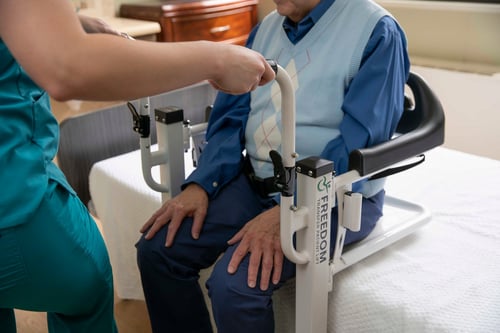
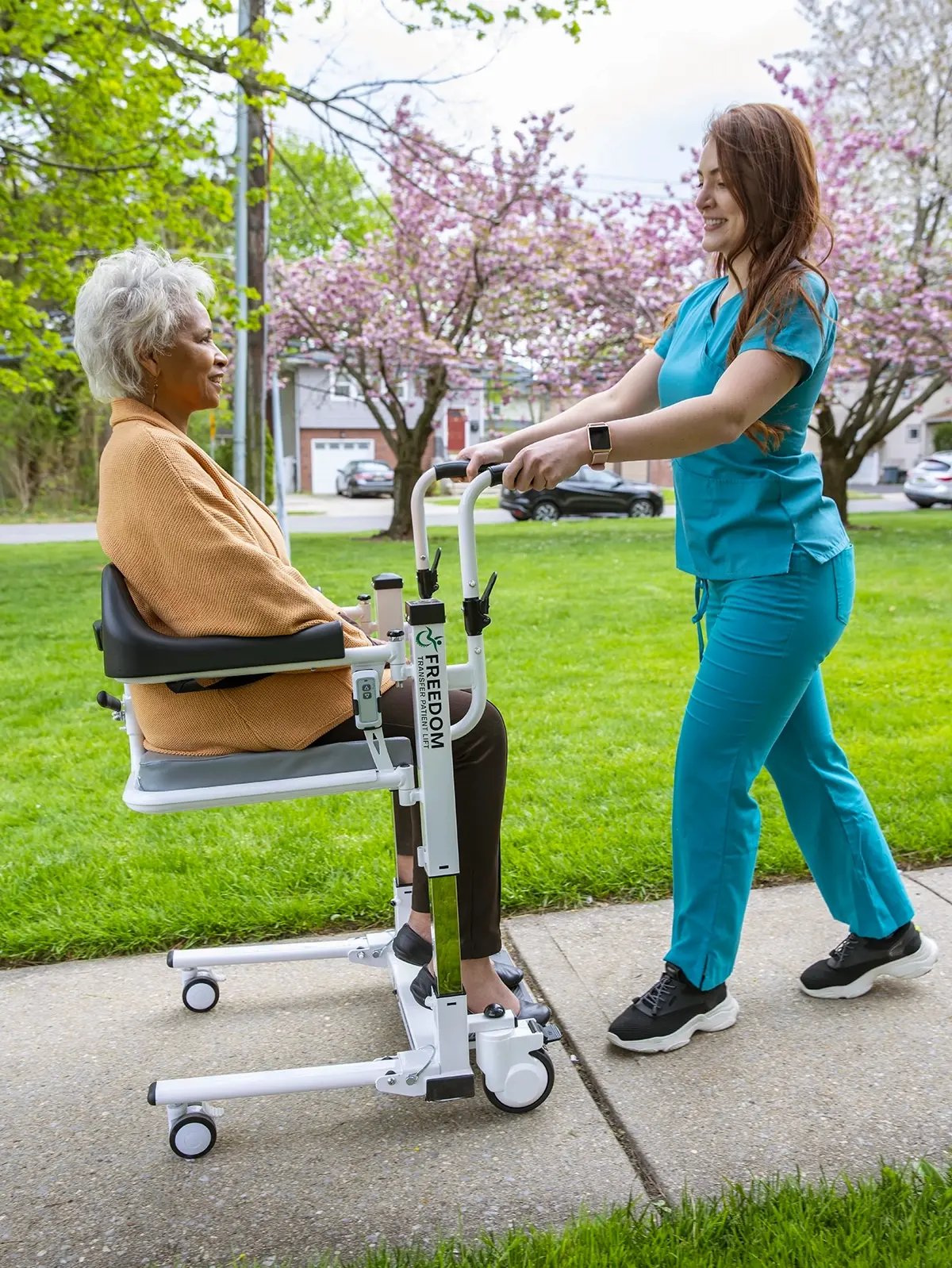
Transfer chairs support someone in a seated position as a caregiver assists with moving between compatible surfaces. Unlike traditional sling hoists, split-seat transfer chairs provide a seat that can be positioned beneath the user.
The Freedom Transfer Patient Lift uses a battery-powered, sling-free seat to assist with everyday bed, chair and toilet transfers. For bathroom environments, the Freedom Aqua is a water-resistant option designed for approved shower use.
How Do Transfer Chairs Work?
The caregiver positions the open split seat around a person who can maintain an upright seated position, closes and secures it according to the instructions, and uses the lift to assist with compatible transfers.
Who is it for?
- People able to maintain an upright seated position
- Individuals needing help with routine seated transfers
- People with a caregiver available
Intended Use:
- Transfers between compatible beds, chairs and toilets
- Moving within approved indoor settings
- Some models are approved for shower use
Caregiver Requirements:
- Caregiver operation and product-specific training
- Some physical effort to steer and position
- Measure clearance and transfer surface heights
What are Sit-to-Stand Lifts?
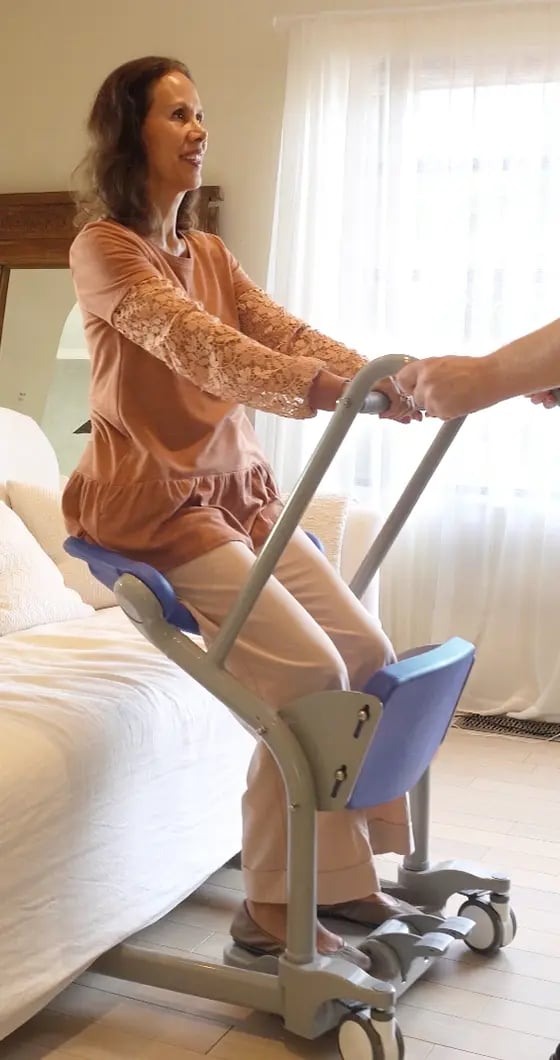
Sit-to-stand lifts help people who can participate in standing but need additional support to rise from a seated position. They are especially helpful for certain transfers and toileting routines.
The Ascend & Go Sit-to-Stand Lift provides hand grips and supportive surfaces to assist with controlled standing and movement. The user must meet the device’s weight-bearing and balance requirements.
How Do Sit-to-Stand Lifts Work?
Depending on the model, handles, knee supports, pads or a compatible sling support a person as they move from sitting to standing with caregiver assistance.
Who is it for?
- Users able to bear some weight as required
- People who can sit upright and participate
- Individuals who need help rising from a chair
Intended Use:
- Assisted sit-to-stand movement
- Certain transfers and toileting routines
- Supporting upright positioning when appropriate
Caregiver Requirements:
- Caregiver training for correct positioning
- Confirm user strength and weight-bearing ability
- Supervise every movement
What are Hoyer (Sling) Lifts?
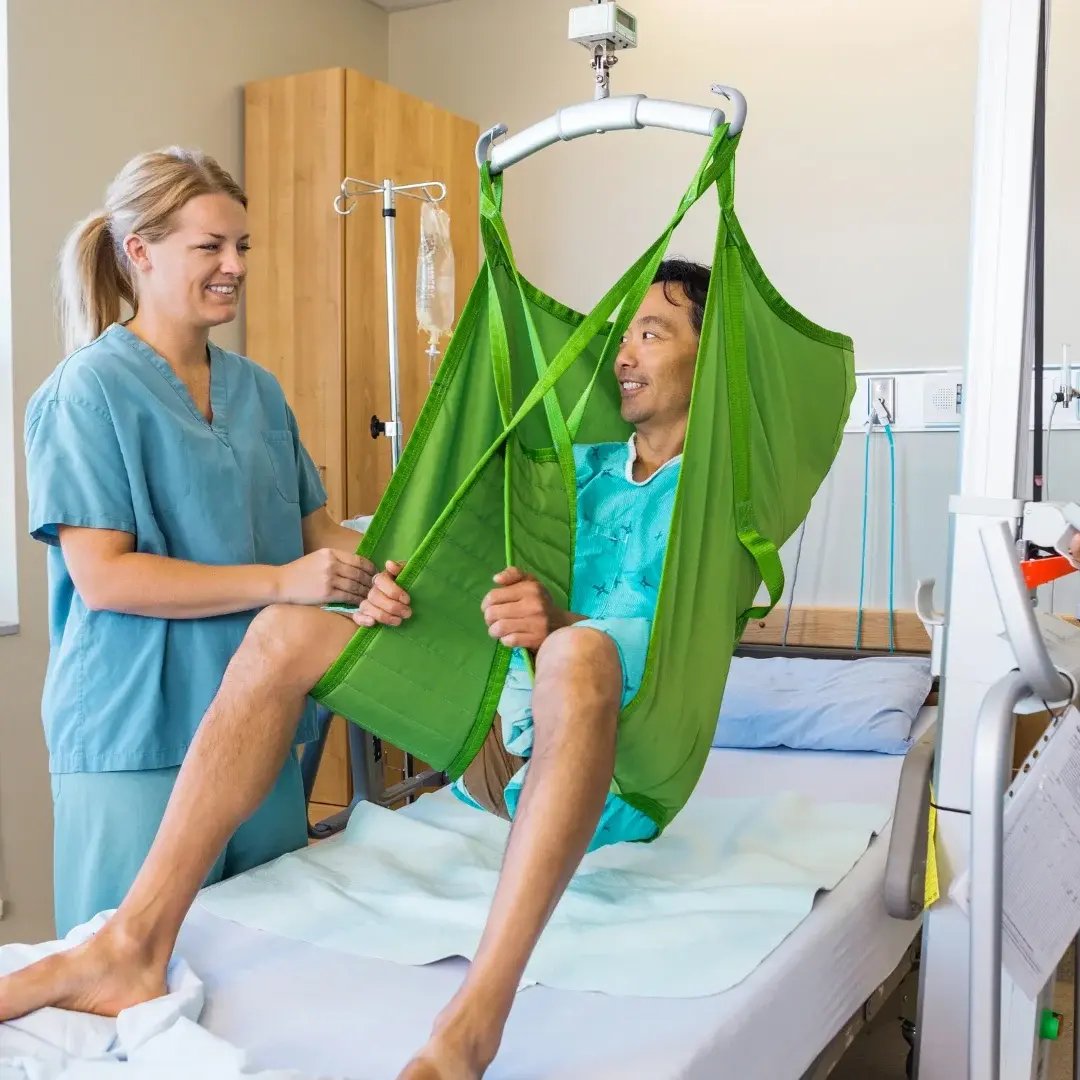
Full-body sling lifts, often called Hoyer lifts, help transfer people who cannot safely support their own weight. A properly fitted sling supports the body during lifting.
Some designs are portable floor hoists, while others use ceiling-mounted tracks. They differ from seated transfer chairs because the person is suspended in a sling during the transfer.
How Do Sling Lifts Work?
A compatible sling is carefully positioned and attached to the hoist. A hydraulic or electric lifting mechanism then raises and moves the user according to the manufacturer’s transfer procedure.
Who is it for?
- Users who cannot safely bear weight
- People requiring full-body support
- Individuals whose care plan calls for a sling hoist
Intended Use:
- Transfers between compatible surfaces
- Supported lifting with properly fitted slings
- Home or clinical use depending on model
Caregiver Requirements:
- Training in sling selection and attachment
- Required assistants per manufacturer and care plan
- Clear floor space and safe positioning
What are Bathroom Lifts?
Bathroom lifts and supports help with bathing, showering and using the toilet. Products differ significantly, so check room dimensions, water-use ratings and individual mobility requirements.
What are Bathtub Lifts?
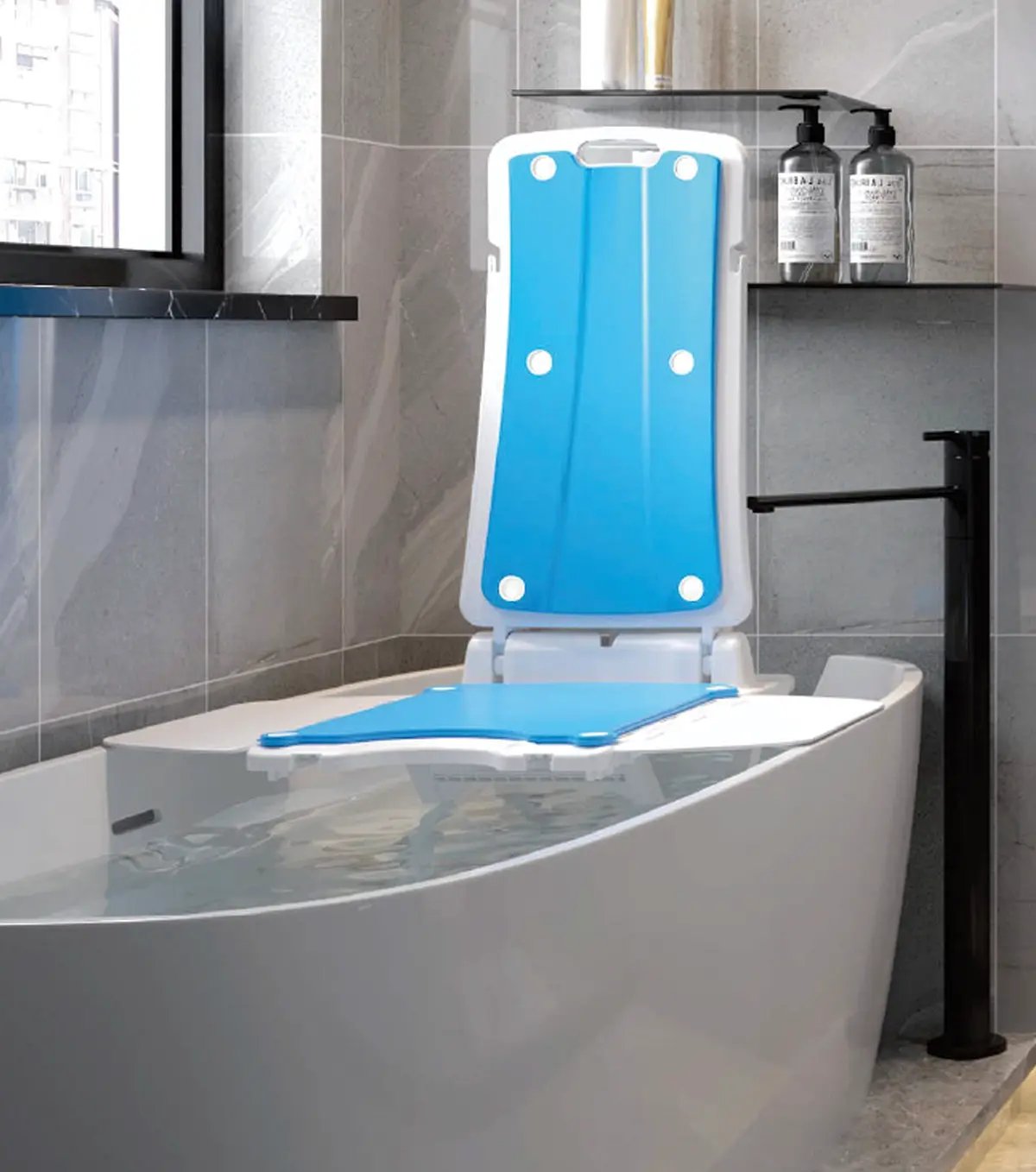
Bath lifts make it easier for people with limited mobility to lower themselves into and rise out of a bathtub while remaining seated.
The Bridge Bath Lift is one example of a powered bath lift. Always confirm that the lift fits the bathtub and that the user meets the sitting-balance requirements.
How Do Bath Lifts Work?
A powered seat raises and lowers inside a compatible bathtub using the controls supplied with the product.
Who is it for?
- Individuals needing assistance with bathing
- Users who can maintain sitting balance as required
- People who have difficulty getting in or out of tubs
Intended Use:
- Raising and lowering a seated person in the tub
- Bathing in compatible bathroom layouts
- Reducing the need for manual lifting
Caregiver Requirements:
- Check installation and bathtub measurements
- Provide help when required by the product
- Follow wet-use and cleaning instructions
What are Toilet Lifts?
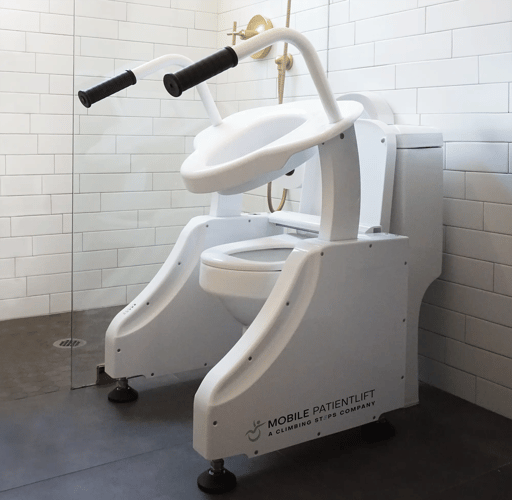
Toilet lifts help people lower themselves onto the toilet and rise again with more controlled assistance. They can make routine toileting more comfortable for those who struggle with sitting and standing.
The ArGo Electric Toilet Lift provides powered assistance for sit-to-stand transitions at the toilet. It is not a full-body transfer hoist.
How Do Toilet Lifts Work?
A supported lifting mechanism raises and lowers the user through a controlled sit-to-stand motion while the person participates according to the device instructions.
Who is it for?
- Users who have trouble sitting and standing at a toilet
- Individuals who can participate in the movement
- People seeking more support during toileting
Intended Use:
- Assisted sitting down and standing up
- Residential bathroom use where compatible
- Controlled support for toileting routines
Caregiver Requirements:
- Confirm user capability and toilet fit
- Practice the approved controls and procedure
- Provide assistance when needed
What are Shower Chairs?
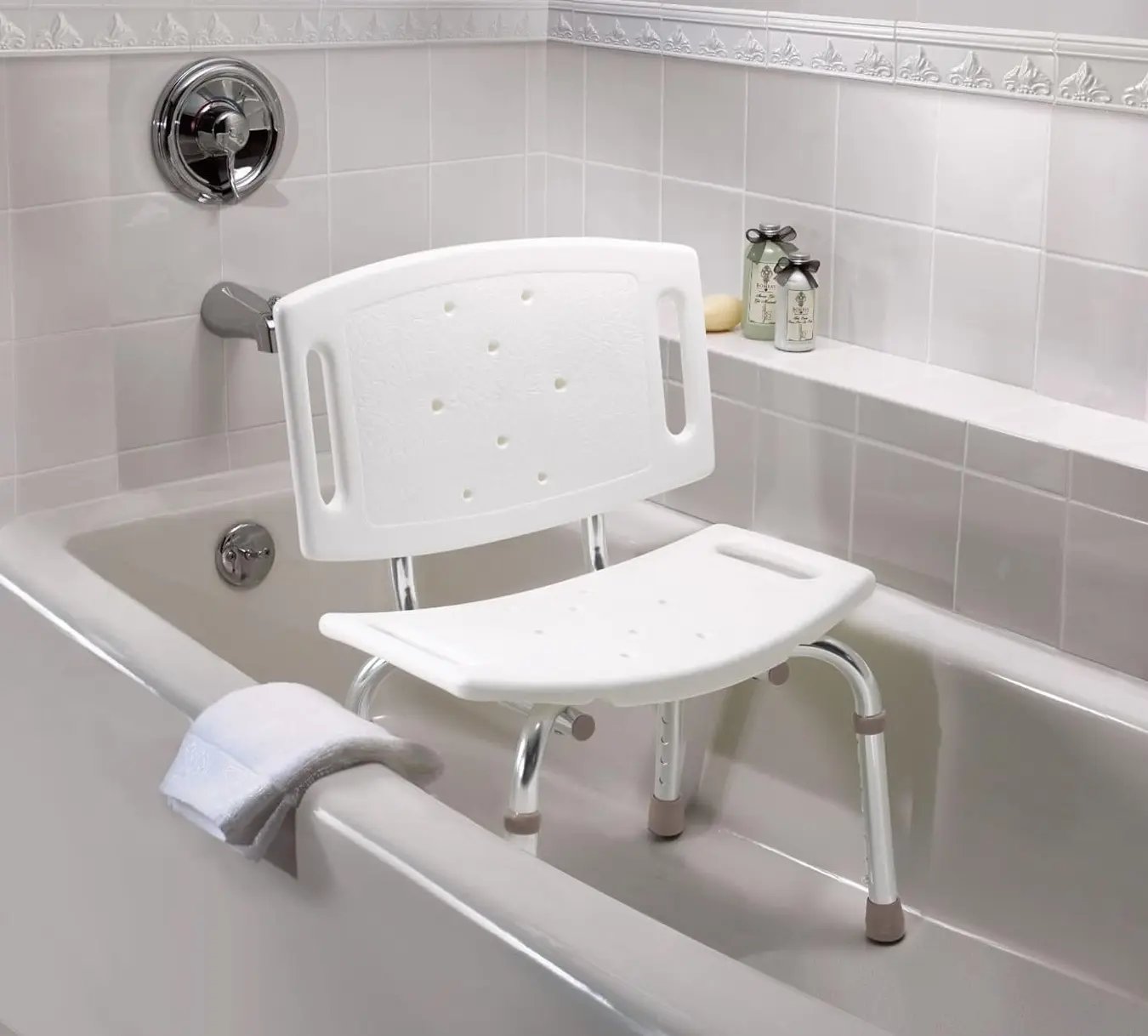
Shower chairs provide a stable seated surface for people who have difficulty standing for the length of a shower. Depending on the design, they may have stationary non-slip legs or rolling frames with brakes.
Water-resistant transfer chairs such as the Freedom Aqua offer another type of seated shower solution. Select products specifically approved for the shower configuration being used.
How Do Shower Chairs Work?
A properly sized shower chair provides a water-safe sitting surface. Some are fixed while others can be wheeled into accessible showers when approved.
Who is it for?
- People who have difficulty standing in the shower
- Users who require seated bathing support
- Those needing added stability while washing
Intended Use:
- Seated showering in compatible spaces
- Accessible walk-in showers where appropriate
- Supporting a safer bathing routine
Caregiver Requirements:
- Check stability, brakes and floor slope
- Assist based on the user’s balance and care needs
- Review installation and product instructions
What are Floor Lifts?
Floor recovery equipment helps return a person from floor level to a supported position after a fall when no injury is suspected and moving them is appropriate. These devices are not a substitute for urgent medical assessment.
What are Inflatable Floor Lifts?
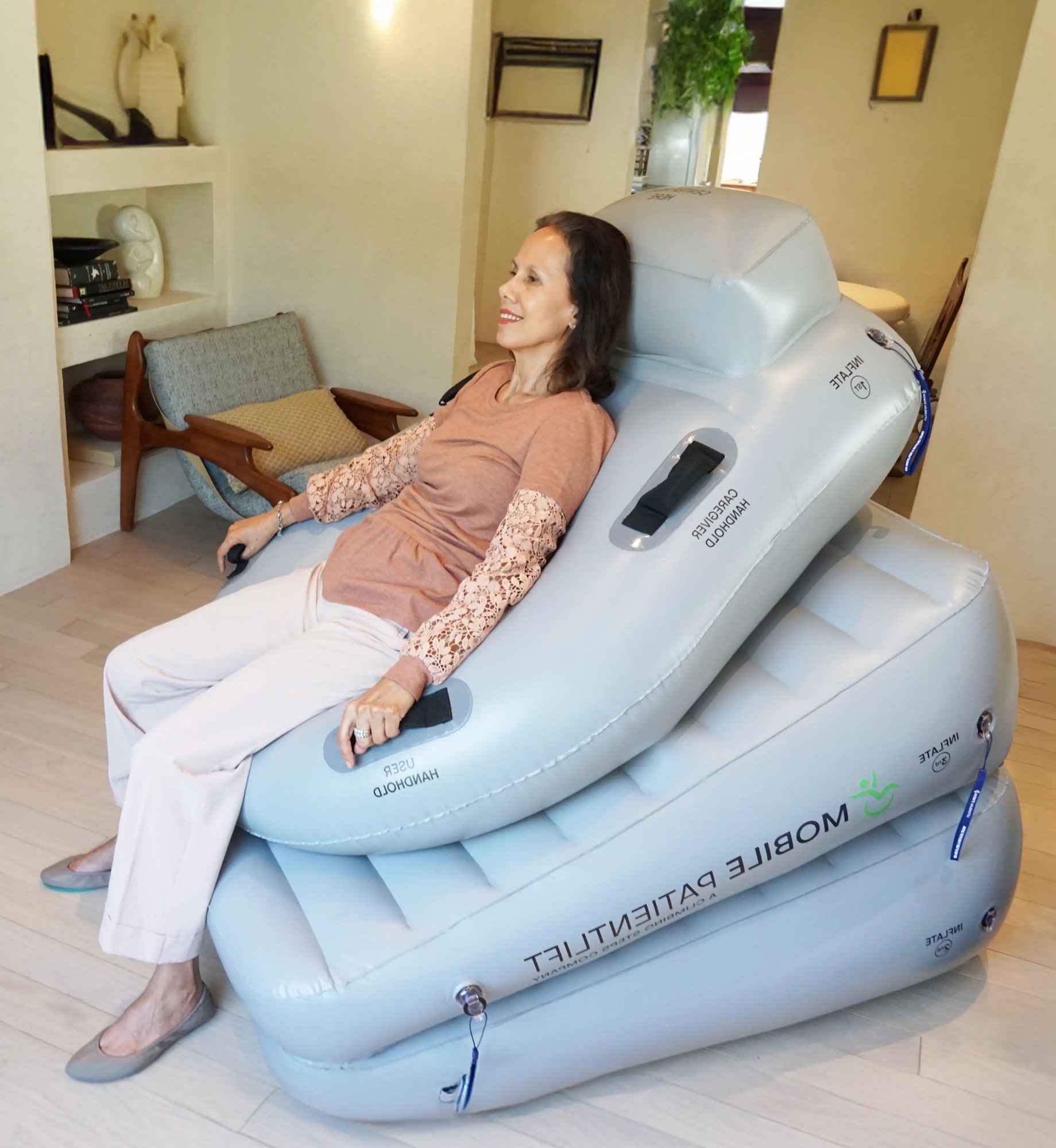
Inflatable floor recovery devices offer a portable way to help a person rise from floor level after a fall when it is safe to move them. They use air-filled sections to gradually increase the seating height.
The HelpUp Inflatable Patient Lift is an example of a powered inflatable fall recovery system designed for appropriate home or care settings.
How Do Inflatable Floor Lifts Work?
An electric pump inflates the lifting sections in a controlled sequence, gradually raising the user from the floor into a supported seated position.
Who is it for?
- People needing help up from the floor after a non-injury fall
- Users whose condition allows safe assisted movement
- Care settings that need compact recovery equipment
Intended Use:
- Assistance following a fall without suspected injury
- Portable floor-level recovery
- Indoor use according to the model instructions
Caregiver Requirements:
- Assess for injury before any movement
- Follow positioning and inflation instructions
- Provide stabilization and assistance as required
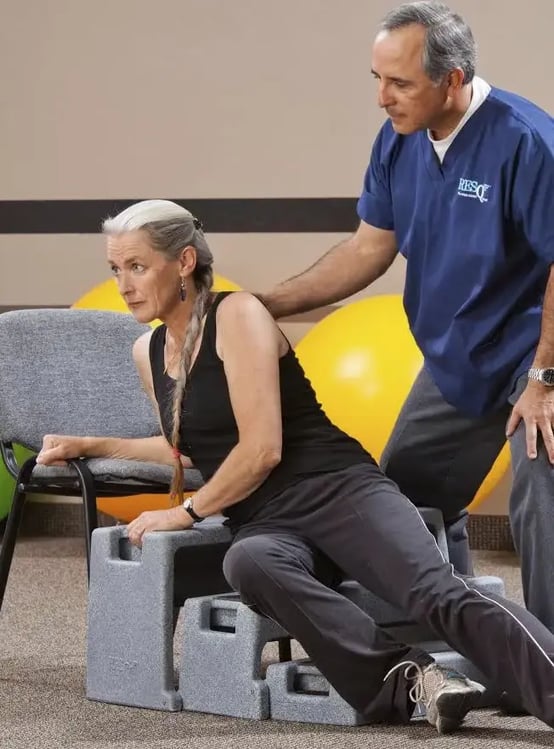
What are Stationary or Step-Based Floor Lifts?
Other floor recovery devices use staged seating, mechanical platforms, or step-like supports rather than inflatable cushions. Some models remain in a chosen area, while others can be relocated.
The best option depends on whether the person can assist with repositioning, the available space and the degree of caregiver support required. Not every step-based recovery aid is a powered lift.
How Do Step-Based Floor Recovery Devices Work?
Depending on the model, a user is guided through a series of progressively higher seating positions or lifted by a mechanical platform to reach a safe seated height.
Who is it for?
- People who can participate as required by the device
- Caregivers following a fall-recovery plan
- Users requiring support at floor level
Intended Use:
- Helping someone rise from floor level
- Staged or mechanically supported recovery
- Selected home and professional environments
Caregiver Requirements:
- Assess safety after the fall
- May involve physical assistance and repositioning
- Training varies by device and user needs
There are Many Types of Patient Lifts
The best lift depends on the user’s mobility, the transfers being performed, the space available and who will operate the equipment. A seated transfer chair, sit-to-stand lift, bath lift and fall recovery aid are designed for different needs and are not interchangeable.
Explore the options at Mobile Patient Lift and consult a qualified care professional for questions about specific transfer needs.
Need Help Choosing a Patient Lift?
Our team can help you compare products, check measurements and find the right equipment for your space and daily routine.
Contact Our TeamCall (212) 366-5483For educational purposes only. Follow each product’s instructions, safety restrictions and caregiver requirements. In the event of a suspected injury after a fall, seek medical assistance instead of attempting a lift.